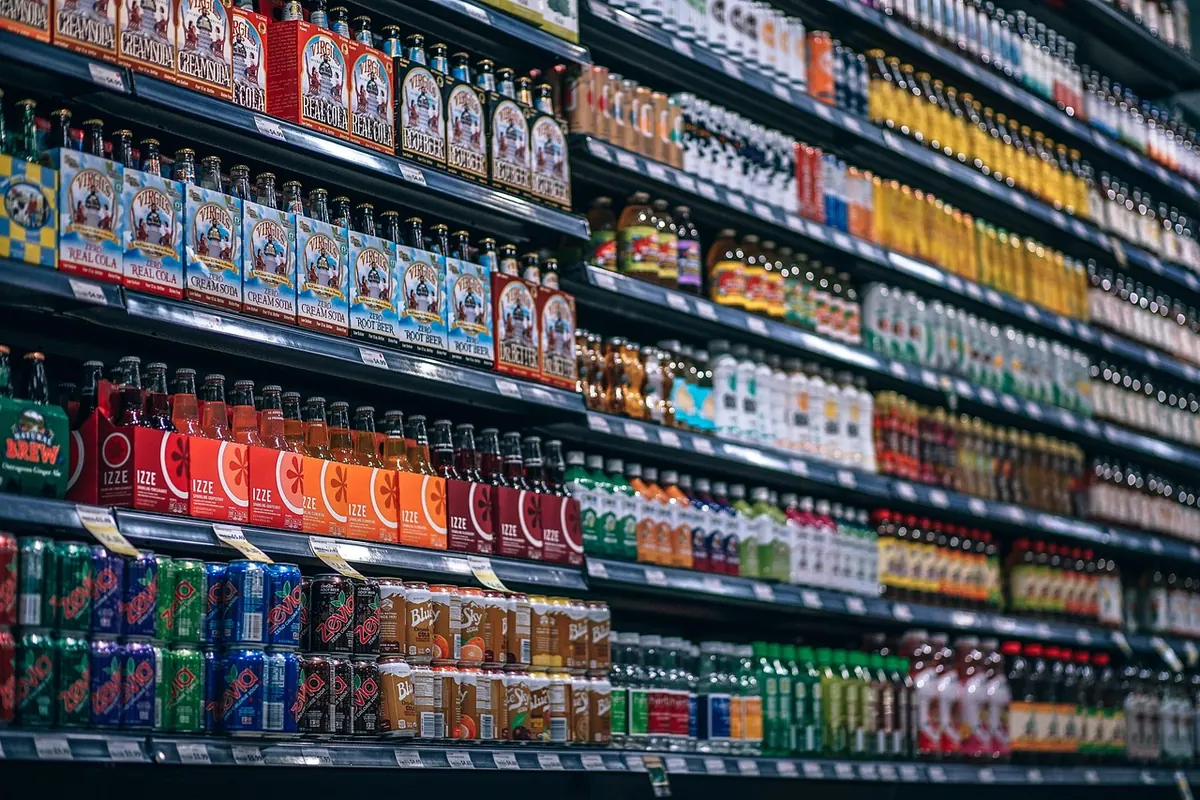
Between a phone-repair kiosk and a nail bar, the shop window advertises nothing more than “Groceries, Halal Meat, Money Transfer.” The second aisle is where the story starts: jars of ajvar stacked beside pickled cucumbers the length of a forearm, a shelf of Nigerian tomato paste, boxes of Filipino ube halaya, a freezer door fogged with cold air. Nobody designed any of this as an archive. It is one anyway. A grocery aisle is the most honest census a neighbourhood produces, written in labels, shipping crates and best-before dates. Read it closely and you can see who arrived, roughly when, what they missed enough to pay for, and what the streets around them have since become.
A Shelf Is a Map
Notice what a diaspora grocery does not do: it rarely sorts by nationality. It sorts by cooking method. Rice arrives in sacks of five, ten, twenty kilos — basmati for one household, short-grain for another, parboiled for a third. Next come pulses in clear bags, then tins, then the spice wall, then the freezer, then the counter where parcels are weighed and money is sent abroad.
The result is a shop that serves four or five cuisines at once without ever saying so. In a single south London aisle you can watch a Somali family buy rice and goat, a Bangladeshi customer pick through okra and bitter gourd, and a Jamaican grandmother choose scotch bonnets and plantain from the same crate. The overlap is the point. Okra, goat, rice, plantain and dried fish are not exotic here; they are simply dinner.
Follow the produce backwards and the map thickens. Plantains from Colombia or Ecuador. Dried shrimp from Thailand or Vietnam. Sumac and pomegranate molasses from Turkey. Ghee tins from the Gulf. Chillies grown in India and shipped through Dubai. A shelf in a suburban strip mall is the far end of a supply chain that someone built because a specific street in a specific city wanted a specific taste.
Every imported shelf is an argument about what home tastes like — and an invoice for how far it had to travel.
Read the Freezer First
Freezers cost money to run, so nothing survives in them by accident. They hold what people buy in volume and cannot make fresh: frozen cassava leaves and egusi for West African kitchens, banana leaves for wrapping, pandan for dessert, curry leaves by the bag, whole tilapia, lamb offal cut for stew, parotta and dumplings stacked like tiles. If you want to know what a neighbourhood actually cooks on a Tuesday, skip the pretty shelves and open the glass door.
The dry goods tell a subtler story. Stock cubes are a small masterclass in regional taste: the same two or three brand names appear across half the world, but the flavour lines change with the market. The version sold in Lagos is not the version sold in Manila, and shoppers know the difference at a glance.
This is also where the specialist shop separates itself from the supermarket. The big store’s “world foods” aisle is one bay, curated for the majority and stocked with what sells fastest. The specialist freezer is deep, awkward and specific — and that specificity is the whole reason people take two buses to reach it.
The Label Is a Trade Route
Turn a jar over. The small print is more interesting than the front: product of, packed for, and the importer’s address, which is often two postcodes away from where you are standing. A mango pickle eaten in Birmingham may have been packed in the United Arab Emirates for a European distributor, using fruit from somewhere else entirely. These triangulations are ordinary now, and they explain a great deal about price, freshness and why one brand tastes different from the jar beside it.
Certification marks are their own economy. Halal logos, vegetarian marks, country-of-origin stamps, import stickers applied over the original label — each one is a claim someone paid to make. Air-freighted fresh herbs and betel leaves cost what they cost because they were on a plane, and the shop absorbs that risk every week. When a favourite brand vanishes for a month, it is usually a shipping problem, not a decision.
Three Streets, Three Histories
The same mechanics produce very different streets. Three examples worth seeking out, whether you live nearby or are only passing through.
Green Lanes, north London
Turkish, Kurdish and Greek Cypriot shops run for miles: hellim and sucuk behind glass, olives scooped from barrels, tulumba syrup sweets by the tray, flatbreads baked through the day, butchers with queues on Saturday morning. The grocery is a meeting point as much as a shop, and the pavement in front does half the work.
Cedar-Riverside, Minneapolis
Somali and Ethiopian groceries where the food aisle is only part of the offer. Frankincense and myrrh sit near the tea and the xalwo sweets; dried goat, sambusa wrappers and cardamom-heavy spices fill the shelves. The counter doubles as a noticeboard for rooms, weddings and lifts to other cities — a service no supermarket provides.
Bellaire Boulevard, Houston
The strip malls of Houston’s Asiatown hold Chinese, Vietnamese and Korean shops in a slow rotation of signage. Live seafood tanks, herbs sold in bunches the size of a forearm, hot-pot bases, freezer cases of dumplings, and bakery counters where the queue is a reliable guide to what was baked most recently.
When the Shelves Change
Aisles are not permanent. Shops pass between communities as rents rise and families move outward; a halal butcher becomes a café, a Polish deli becomes a bubble tea shop, and the products that defined a street in 2005 are suddenly only available online in bulk. Second-generation customers order in bulk, buy in supermarkets, or cook less often, and the shop adjusts or closes.
Then there is curiosity. When chilli crisp, gochujang and tahini become mainstream ingredients, a new customer arrives — one who buys two items, photographs the shelves and leaves. That attention is mostly good for business. It also raises prices, pushes stock towards what outsiders recognise, and can slowly turn a working grocery into a curated display of itself. Watch which products get shelf space at eye level and which get moved to the back, and you can see that shift happening.
How to Shop an Aisle You Don’t Own
You do not need permission to shop anywhere, but a little method makes the trip better for everyone, including you.
- Ask. “How do you cook this?” and “How many people is this pack for?” are welcome questions. Ask the person at the till, not a customer blocking the freezer.
- Start small. Buy the smallest size of a spice blend or paste before committing to the family tub.
- Follow the fresh produce. What is stacked high and sold cheap tells you who shops here weekly. Buy that.
- Read the small print. The label’s origin and the importer’s address explain why a jar costs what it does.
- Check allergens yourself. Imported packaging may follow different labelling rules from your country’s, so if allergies are a concern, ask directly and, where it matters, get proper advice rather than guessing from a translated sticker.
- Time it well. Weekday mornings are calmer and the produce is freshest. Expect queues and shorter hours around Eid, Lunar New Year, Diwali, Ramadan and Christmas.
- Be a customer, not a tourist. Ask before photographing shelves or people, and do not treat a working shop as a museum of somebody’s background.
Pick one unfamiliar thing and build a meal around it: frozen parotta, a jar of ajvar, a bag of dried chillies, a tin of good tomato paste. That is how these shelves have always worked — item by item, household by household, until an aisle becomes a street and a street becomes a neighbourhood.
Photo: igorovsyannykov / Pixabay