Your first COP can feel like arriving at a vast airport where every announcement is in code. The headlines say the latest summit ended with a fight over the NCQG, the G77 went into a huddle, and AOSIS refused to sign. It is a negotiation, and negotiations run on shorthand. This guide gives you the short version: what the big meetings are, who the main blocs are, why finance keeps blocking the room, and how to follow it without keeping fifteen tabs open.
What a COP is, and what it is not
COP stands for Conference of the Parties. The parties are governments that signed the UN Framework Convention on Climate Change, the 1992 treaty shortened to UNFCCC. They meet once a year to review progress, adopt decisions, and set mandates. The Paris Agreement was adopted at COP21 in 2015, and since then COPs have also hosted the meeting of Paris Agreement parties, which is why schedules show the letters CMA.
A COP is not one meeting. It is a city of meetings: plenaries, contact groups, informal consultations, press conferences, and side events. The final text is often a “cover decision” that stitches together compromises, plus annexes and technical papers.
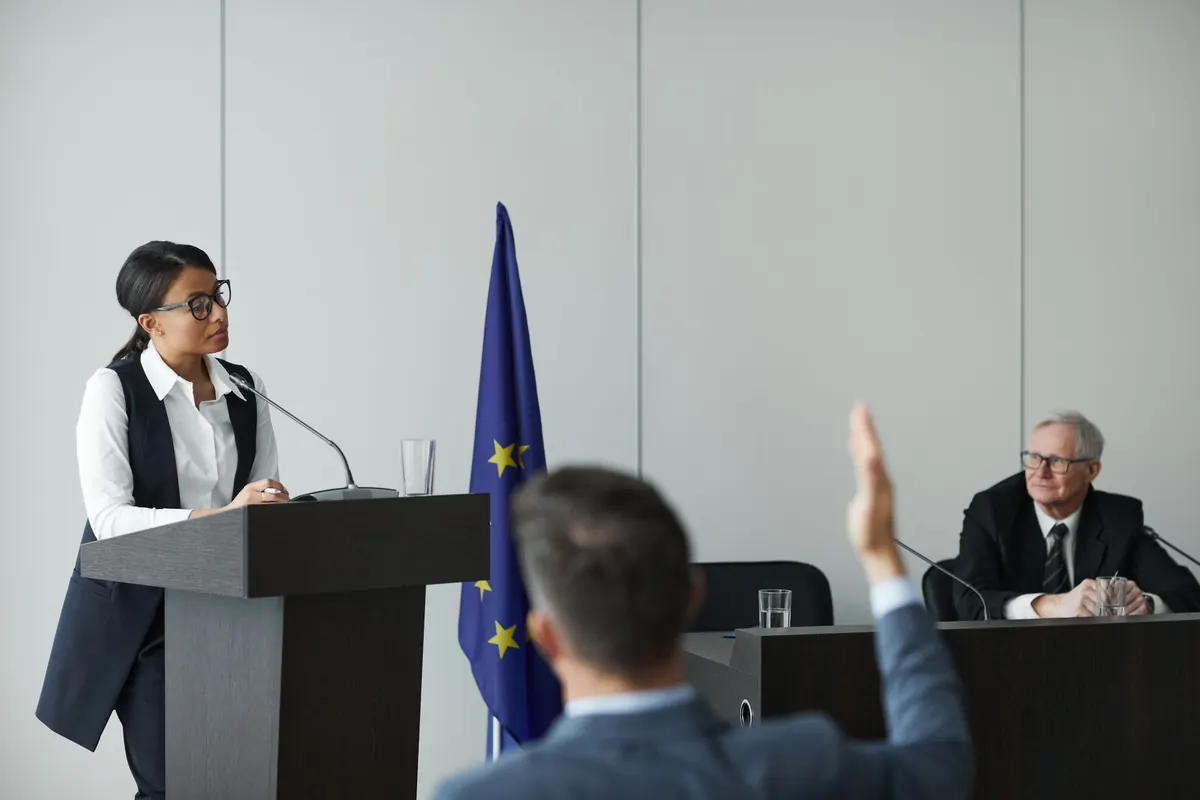
One rule explains most of the drama: decisions are generally made by consensus. That does not mean everyone is happy. It means no one formally objects. A single country or a small bloc can slow a text, reopen a paragraph, or force a late-night huddle. When a delegate raises a hand at the closing plenary, you are watching that rule in action.
The acronyms you can safely learn first
You do not need the whole dictionary. If you learn five, make them COP, NDC, G77, AOSIS, and GCF. The rest can wait until a text forces you to look them up.
- UNFCCC: the 1992 climate treaty and the secretariat that supports the talks.
- COP: the annual Conference of the Parties. The number changes; the format does not.
- CMA: the meeting of the parties to the Paris Agreement, usually run alongside the COP.
- NDC: a Nationally Determined Contribution, the climate plan each country submits under Paris. “Raising ambition” usually means revising an NDC.
- G77 plus China: a large, diverse bloc of developing countries.
- AOSIS: the Alliance of Small Island States, a vocal group on 1.5C and loss and damage.
- LDC: Least Developed Countries, focused on adaptation and support.
- Umbrella Group: a loose group of developed economies outside the EU, including the United States, Japan, Australia, and Canada.
- GCF: the Green Climate Fund, a major channel for climate finance.
- Article 6: the Paris Agreement section on carbon markets and cooperative approaches.
One more word: “brackets.” Square brackets around text mean the language is unresolved. A text full of brackets is still in play. When brackets disappear, negotiators have either agreed or given up.
The blocs: who is actually speaking
Countries rarely negotiate alone. They form groups to amplify leverage, share intelligence, and protect one another from pressure. That is why a small island state can sound as loud as a large economy: it speaks through a bloc, and the bloc speaks for many votes.
AOSIS is the moral voice on 1.5C and loss and damage. The LDC group focuses on adaptation and support. The African Group of Negotiators pushes finance and adaptation. The G77 plus China is the largest developing-country bloc, but it is a coalition of coalitions, so its positions can be cautious. The Umbrella Group and the EU represent developed-country positions, though they do not always agree. The High Ambition Coalition is a cross-regional alliance campaigning for stronger targets.
When a bloc statement appears, read it twice. First for what it demands, second for what it leaves out. Bloc statements are negotiated documents, so they are careful. The gaps tell you where the fight is.
Finance: the argument under every argument
Climate finance is the recurring fault line. Developing countries need money to cut emissions and adapt to impacts. Developed countries have pledged support, but the details — how much, in what form, through which channel, and on what timetable — are contested every year.
The best-known pledge is the $100 billion a year that developed countries aimed to mobilise by 2020. That goal was met late, according to official reporting, and the fight has moved to a new collective goal, usually called the NCQG. You will also hear about the Loss and Damage Fund, created to help vulnerable countries recover from climate disasters, and about the difference between adaptation finance and mitigation finance. Adaptation money helps countries cope with heat, floods, and drought. Mitigation money helps them cut emissions.
When you see a finance announcement, ask four questions:
- Is it new money, or a repackaged pledge?
- Is it grants or loans?
- Is it public money or private investment mobilised by public guarantees?
- When does it arrive, and who decides how it is spent?
Those questions will save you from most misleading headlines. “Billions pledged” may describe a target, a guarantee, or a loan. This is public-budget diplomacy, not personal financial advice; for your own money decisions tied to climate risk, ask a licensed adviser.
How to follow a session without losing the plot
You cannot follow every room, and you should not try. Pick a narrow lane and let the rest be background noise. A workable routine:
- Choose one theme. Finance, adaptation, Article 6, or loss and damage. One is enough for your first COP.
- Use the official schedule. Mark the plenaries and press conferences that touch your theme.
- Read the Earth Negotiations Bulletin. The ENB follows the talks closely and explains what changed. It is the closest thing to a running annotated transcript.
- Follow three or four credible reporters. Not twenty. Stick to people who read the texts.
- Look for the cover decision and bracketed text. The cover decision is the political summary; brackets show where fights remain.
- Watch the closing plenary. Opening speeches are for positions. Closing plenaries are for decisions and objections.
Keep a one-page glossary in your own words. When a new acronym appears, write it down and move on. You will learn more from watching how a term is used than from memorising a definition.
Common traps for newcomers
- Announcements are not agreements. A coalition or pledge may be real, but it is not a decision adopted by the parties.
- Pledges are not disbursements. Money can be promised, programmed, and spent over years.
- Consensus is not enthusiasm. A deal can be adopted while many delegations call it insufficient.
- The final text is often weaker than the speeches. Read the text.
- Small states are not small in negotiations. Blocs give them procedural leverage and staying power.
Your starter kit for the next summit
Before the next COP, do five things. Pick one issue. Learn five acronyms. Find the ENB and two reliable reporters. Identify three blocs and read one statement from each. Put the closing plenary in your calendar. That is enough to follow the main story without pretending to be a delegate.
You will not understand every reference. Nobody does. The goal is to see the shape of the argument: who wants what, who pays, who blocks, and what changes when the gavel comes down. Once you can see that, the acronyms become what they are — useful shorthand, not a wall.
Photo: Werner Pfennig / Pexels